LiveChat
  Support
Brandable Domain Names: What Makes a Domain Brandable and How to Choose One
If you’re sitting on a shortlist of domains and you can’t decide between something descriptive like `bestcheapshoes.com` and something invented like `Zappos.com`, let me save you the agonizing. For almost any business planning to last more than a season, you want the brandable one. I’ll explain exactly why, what “brandable” actually means, and how to create a name you can own outright.
Key Takeaways
• A brandable domain name is a unique, memorable, ownable name that *becomes* your brand, not a string of keywords describing your product.
• Brandable domains win long-term because they’re defensible, trademark-able, distinctive, and grow with you when you expand beyond your first niche.
• Descriptive keyword domains (like `bestcheapshoes.com`) are instantly clear but generic and nearly impossible to own or protect.
• Strong brandable names are short, easy to say and spell, pronounceable, ideally `.com`, and pass the “radio test.”
• The trade-off: brandable names require brand-building because they don’t explain themselves. That investment is worth it for any lasting business.
What does “brandable” actually mean?
A brandable domain is a name that is uniquely yours. It doesn’t try to describe what you sell; it becomes the thing people associate *with* what you sell. Think of invented or coined words (Google, Kodak), blends of two words (Pinterest, Netflix), or real words used in an unexpected context (Apple for computers, Amazon for a bookstore).
Contrast that with a descriptive keyword domain like `bestcheapshoes.com` or `cityplumbing.com`. These spell out the service in plain words. They’re easy to understand at a glance, but that’s also their ceiling. They describe a category anyone can occupy, not a brand only you own.
Here’s the simplest test I use with clients: *Could a competitor put up the same name and have it make just as much sense?* If yes, it’s descriptive. If the name would feel like stealing your identity, it’s brandable.
Why do brandable domains win long-term?
I recommend brandable for most serious businesses, and here’s my reasoning.
- They’re memorable. A distinctive coined word sticks in the mind. Generic keyword strings blur together.
- They’re defensible. You can usually trademark an invented or distinctive name. You generally cannot trademark a purely descriptive phrase, which means anyone can use a near-identical version.
- They stand out. In a crowded market, a unique name is a competitive advantage. Ten `best-cheap-[product].com` sites look identical; one brandable name does not.
- You own the mental association. When people think of your category, you want *your* name to surface, not a generic description they could attach to anyone.
- They grow with you. If `bestcheapshoes.com` decides to sell handbags, the name fights the expansion. A brandable name has no such ceiling. Amazon started with books.
- They’re word-of-mouth friendly. A clean, pronounceable brandable name is easy to say out loud and type directly into a browser.
Here’s the framing that makes the decision obvious: a brandable domain is an asset you OWN; a descriptive keyword domain is a category you RENT attention in. `cityplumbing.com` describes a service every plumber in every city offers; you’re renting visibility in a crowded category and competing on keywords forever. A brandable name becomes uniquely yours, legally defensible, and free to expand when your business does. You’re not renting space in a category, you’re building a property nobody else can claim.
How do you create a brandable name? (Techniques that work)
Brandable doesn’t mean random. There are repeatable techniques. If you want help generating raw candidates, run them through a tool first (), then shape the output with these methods.
- Invent a word. Coin something entirely new. Kodak and Xerox mean nothing; that emptiness is the point, because you fill it.
- Blend two words. Combine concepts into one. *Pin* + *interest* gives Pinterest. *Snap* + *chat* gives Snapchat.
- Add a prefix or suffix. Attach *-ly*, *-ify*, *-io*, *get-*, or *go-* to a root word. Shopify, Spotify, Calendly.
- Real word, unexpected twist. Take a familiar word into a new domain entirely, the way Apple, Amazon, and Oasis did.
- Short and punchy. One or two syllables that simply *sound* like a brand. Stripe, Notion, Slack.
- Made-up but pronounceable. Invent freely, but make sure a stranger can say it on the first try.
A quick comparison
| Trait | Brandable domain | Descriptive / keyword domain |
|---|---|---|
| Example | `Notion.com`, `Stripe.com` | `bestcheapshoes.com`, `cityplumbing.com` |
| Memorability | High, distinctive | Low, blends in |
| Trademark-able | Usually yes | Usually no |
| Explains itself | No, needs building | Yes, instantly clear |
| Room to expand | Unlimited | Locked to the niche |
| Ownership | You own it outright | You share the category |
| Best for | Lasting brands | Quick, narrow plays |
What are the traits of a strong brandable domain?
Not every invented word is a good one. Run every candidate through this checklist before you buy.
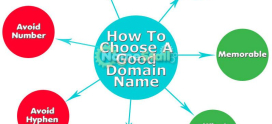
- Short. Fewer characters are easier to remember and type. Aim for brevity without forcing it.
- Easy to say and spell. If you have to spell it out loud every time, it fails. Avoid spellings that fight pronunciation.
- Pronounceable. A stranger should be able to read it once and say it correctly.
- `.com` if at all possible. It remains the default people type and trust. Secure it when you can.
- No awkward hyphens or numbers. `my-shop-2.com` is hard to say aloud and easy to mistype. Skip them.
- Passes the radio test. Say the name out loud. If someone could hear it and type it correctly without seeing it spelled, you’re good.
- Not trademarked. Always check that your candidate isn’t already a protected mark in your industry before you commit.
The radio test, specifically
I want to single this one out because it catches the most mistakes. Say your domain to a friend across the room and ask them to type it. If they hesitate, add a hyphen, or guess the spelling wrong, the name has a problem. Word-of-mouth is one of your most valuable channels, and a name that can’t survive being spoken out loud quietly leaks customers.
What’s the trade-off with brandable domains?
I won’t pretend brandable is free. The honest trade-off is this: a brandable domain needs brand-BUILDING. It doesn’t explain itself the way a keyword domain does. `cityplumbing.com` tells you what it sells in two seconds. `Zynk.com` tells you nothing until you invest in making it known.
So the calculus is straightforward:
- Descriptive is instantly clear, but generic, hard to own, and capped at its niche.
- Brandable requires upfront brand-building, but rewards you with a distinctive, defensible, expandable asset.
My recommendation: unless you’re running a deliberately short-lived, hyper-narrow play where instant keyword clarity is the entire strategy, choose brandable. The brand-building cost is real, but it’s an investment in something you own rather than rent. You were going to invest in marketing anyway. Point that investment at a name nobody can take from you.
Securing your brandable name with DarazHost
Once you’ve landed on a name you love, the next step is locking it down before someone else does. DarazHost makes that part simple. Run instant availability checks across a wide range of TLDs so you can find your brandable name and secure the `.com` (plus any extensions worth protecting) in one place. Pricing is transparent, with no surprises at checkout, so you know exactly what you’re paying to own your name.
And because a domain is only the start, DarazHost also gives you the hosting to launch the brand the moment you register, so there’s no gap between buying the name and building on it. If you’re stuck between two candidates or want a second opinion on a spelling, our 24/7 support is there to help you lock in the right name with confidence. Find it, secure it, launch it, all from one dashboard.
How to make the final call
If you’ve done the work above and you’re still torn, here’s what I’d do. Generate a wide list of brandable candidates, filter them through the traits checklist, run the survivors through the radio test, confirm the `.com` is available, and verify nothing’s trademarked. Then pick the one that *feels* like a brand when you say it out loud. Don’t optimize for keywords you can defend; optimize for a name you can own.
The descriptive domain is tempting because it feels safe and clear. But clear and ownable aren’t the same thing. Pick the name you can build into something, not the one that merely describes what everyone else already sells.
Frequently asked questions
Are brandable domains better for SEO than keyword domains? Exact-match keyword domains lost most of their ranking advantage years ago, and modern search rewards strong brands, quality content, and authority signals. A brandable domain doesn’t hurt SEO, and the brand recognition it builds (direct traffic, branded searches, links) tends to help more than a keyword in the URL ever did.
Do I really need the `.com`? For a brandable name, I push hard for the `.com`. It’s still the default people assume and type, and it signals legitimacy. Newer extensions can work, but if a strong `.com` is available for your name, that’s usually the one to secure first.
What if every brandable name I want is taken? That’s exactly why invented words, blends, and prefix/suffix techniques exist. Coined and blended names have a far larger pool of available `.com` options than real dictionary words. Lean into making something new rather than chasing a word everyone already wants.
Is a brandable domain worth it for a small local business? Often yes, especially if you plan to grow or expand services. A descriptive name like `cityplumbing.com` locks you into one trade in one place. A brandable name lets you add services, expand to new areas, and build a reputation that’s genuinely yours. If you truly only want narrow, instant local clarity and nothing more, descriptive can be fine, but that’s the exception.
How long should a brandable domain be? Shorter is generally better for memorability and typing, but pronounceability matters more than raw length. A clean, easy-to-say six- or seven-letter name beats a cramped four-letter mashup nobody can pronounce. Optimize for “easy to say and spell,” and length tends to take care of itself.